

From time to time I think about the books that I read when I was young. That they still have resonance all these years later and I can remember the profound effect that they had on my thinking and my imagination is testimony to their writing. Of course, novels like The Lord of the Rings and the Conan series that I remember fondly as well as books by Fritz Leiber, L. Sprague de Camp and, a little later, Philip K. Dick. Then there was Riverworld by Philip José Farmer.
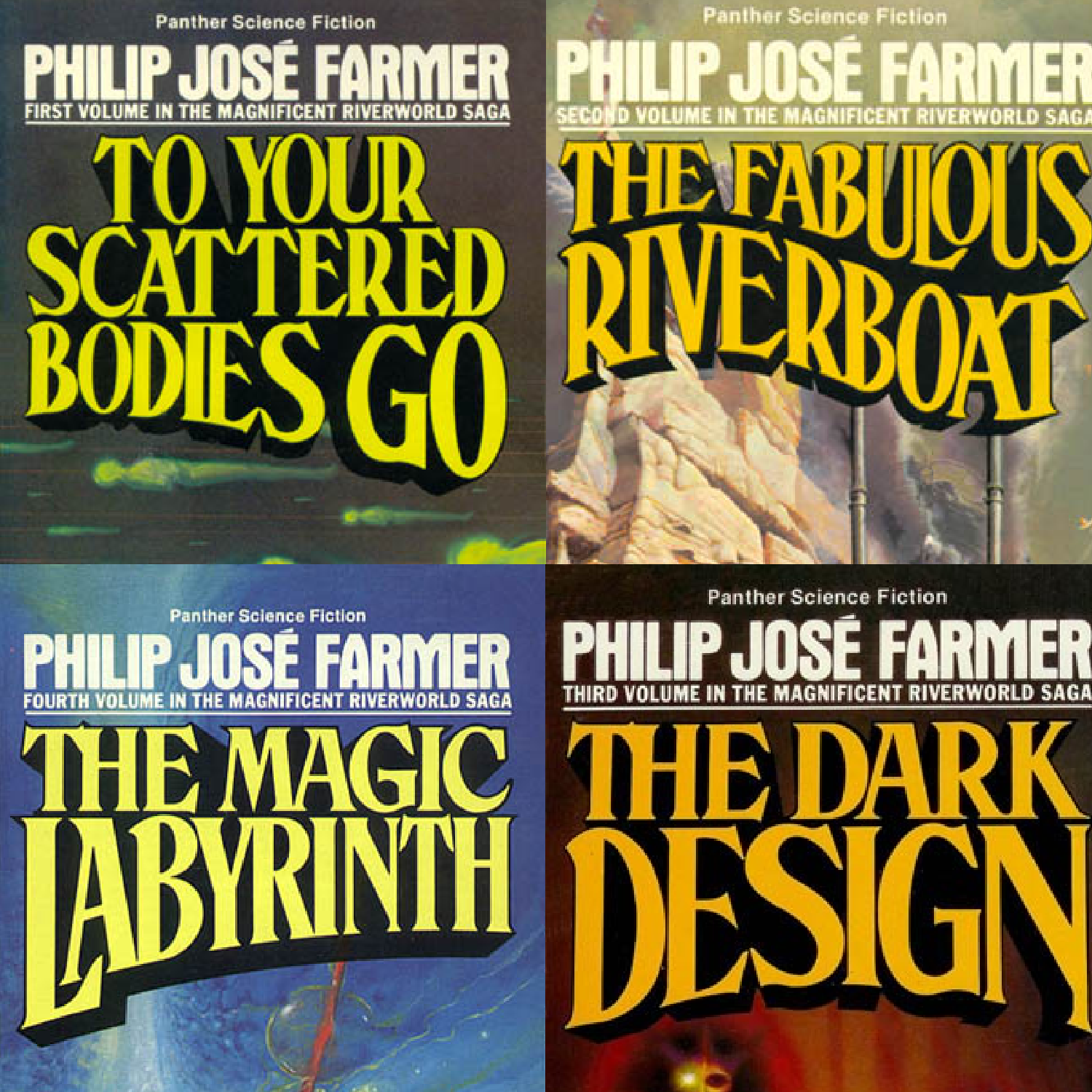
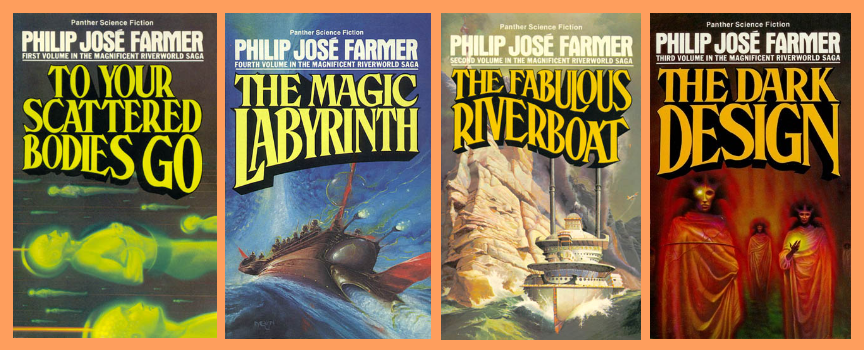
Riverworld was doubtlessly recommended to me by the owner of the Stargate One bookshop in Rochester, a place I spent many wonderful hours in after school and on Saturdays. I have strong memories of the covers – which remain uncannily arresting – which would have also attracted me back then – especially the first, To Your Scattered Bodies Go with it’s strange, luminous floating bodies and a title straight out of 1960s Star Trek or Marvel comics.
The series of books blew my young mind back then. It involves actual people from history – such as Richard Burton, Mark Twain and Cyrano de Bergerac – who wake up on a world consisting of what seems an endless river along with everyone else who ever lived. They are provided with food from “grailstones” and form communities both benign and horrific. When they die, they are resurrected somewhere else along the river. Some characters begin to question how they came to be on Riverworld and begin journeys to the headwaters of the river where they hope to find answers in a dark tower.
I remember racing through the first two novels, To Your Scattered Bodies Go and The Fabulous Riverboat, and then struggling with the third and fourth, The Dark Design and The Magic Labyrinth, being overly-complex and involving too many characters. My understanding at the time was that this was the end of the series – even though it felt somewhat unresolved. I still remember enjoying them a great deal and have fond memories of the Panther paperbacks I had on my bedroom bookshelf. I moved away from reading SF in my mid-teens and the books disappeared when I moved away from home.
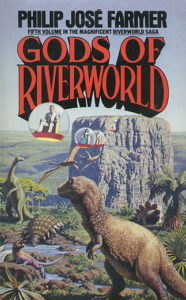
Later, in my mid-twenties I found a copy of what became the final book in the series, Gods of Riverworld, and I can distinctly remember not enjoying it at all (maybe because I wasn’t so invested in the characters that Farmer concentrated on at the time). Since then, I’ve considered re-reading the series and even got a far as buying a secondhand copy of the later short story collection, Tales of Riverworld, but I have that nagging fear that it’ll just ruin the nostalgic memories of the series that I maintain.
In terms of the impact of Riverworld on me, I think that it opened me up to being able to consider aspects of life which I’d hitherto only understood in terms of a religious or supernatural nature as something that could be managed in terms of science. The resurrections in Riverworld are facilitated through technology by an alien race. I think it enabled me to consider the possibility back then that it could be possible to have an afterlife without a god – something that is pretty much standard pop-philosophy these days (and probably was back then at the start of the 1980s but I just wasn’t aware). I came into conflict with teachers at school over religion at that time (which is a whole other story) when I was beginning to challenge how I thought about things.
