Introduction to English and Its Teachers

Notes from English and Its Teachers by Simon Gibbons (2017)
Chapter 1 – Introduction
Simon Gibbons presents the purposes, rationale and scope for this study of the development of secondary school English teaching from the mid-1960s to the present. He defines three periods during this time but agrees that the centralising action of the 1988 National Curriculum was a “watershed moment” and that the loss of teachers’ autonomy has coincided with the deprofessionalisation of subject teachers. Gibbons insists that to be an effective English teacher you need to develop a personal vision based on knowledge of how English is best learned and taught (not simply becoming skilled at delivering pre-prepared lessons or implementing the latest recommended teaching strategies).
- “This is not a neutral enterprise.” – Gibbons notes that a “basic skills curriculum” aims to reproduce societal norms.
- Gibbons: “A broader English curriculum that embraces the seemingly ever-increasing varieties of language and dialect, explores how language changes over time, introduces children to the breadth of ways in which they can speak and write in the increasing forms of media available to them, and exposes them to literature from across times and continents and cultures has the potential to do so much more. The links between language development and thought attest to the significance of English in the way it can enable the growth of character, and how in developing linguistics resources children are internalising culture and society.”
- Gibbons: “Literature, in revealing the worlds, minds, sensibilities and beliefs of writers, allows children to deepen under standing of the way they and others live, and pursue fundamental moral, ethical and political questions.”
- Gibbons defines last 50 years is represented by three periods:
- mid-1960s to mid-1980s: expansion of English, teachers drew in new technologies, expansion of comprehensive schooling, English teachers were fighting for something, increased attention to cognitive development and psychology, efforts to articulate “overarching theory” for the subject.
- late-1980s to start of new millennium: advent of National Curriculum, unprecedented central intervention in schools in terms of curriculum, assessment and pedagogy (symptomatic of a global standards-based reform agenda in education), increased marketisation, more fragmented landscape. English teachers fought against central impositions and new models of English seeking a return to more traditional models at the expense of progressive models.
- mid-2000s and “existing as the status quo today”: “it is tempting to say that the fight has disappeared, perhaps because it is difficult to see where the fight is, how to fight it and to sustain any belief that it can be won. Even if, to an extent, central intervention has become less overtly direct, and even if the landscape now purports to offer schools and teachers more freedom, the legacy of nearly thirty years of top-down reform has been profound deprofessionalisation – leaving English teachers with the underlying sense that the critical decisions about what to teach and how to teach arc no longer theirs to make.”
- The introduction of the National Curriculum was a “watershed moment”.
- G. McCulloch – The Struggle for the History of Education (2011) – shows that there have been “competing rationales” within the study of the history of education.
- Gibbons: “I would argue that to be a genuinely effective teacher of English, one needs more than the ability to implement the most recently recommended teaching strategy or to download the latest inspection-proof lesson or unit of work. One needs to have a clear sense of what English is, what its purpose in the education of children should be, and the ways in which this is best effected in a given classroom, at a given time, with a particular group of pupils. For want of a more satisfactory term, it is about having an underpinning foundation – a philosophy – of the subject and how it is best learnt and taught.”
- Unless English teachers have a philosophy or ideology then someone else’s philosophy or ideology is “merely enacted rather than understood”.
- Brian Simon – Education and the Social Order (1991): “things have not always been as they are and need not remain so”.
- Seminal history of English is David Shayer’s The Teaching of English in Schools 1900-1970 (1972). Shayer’s book published at same time the New English (a progressive pupil-centred model) was beginning to develop as an orthadox method. Shayer optimistic about future development of English.
- Gibbons not convinced there is “substantial agreement” about a philosophy of English and believes that there has been a deprofessionalisation of teachers that obscures need for personal philosophy. Critical that English teachers adopt a “total view first”.
- Margaret Mathieson’s The Preachers of Culture (1975) – more far reaching and philosophical than Shayer. Should be required reading for anyone entering the profession.
- Both Mathieson and Shayer seem to present the development of English in a non-existent or benign policy context (when decisions taken by teachers themselves).
- Clark – War Words: Language, History and the Disciplining of English (2001) – sets debates in context of political intervention.
- Effects of centralisation. Gibbons: “Centralisation has almost invariably not been in the hands of subject experts, nor have policymakers often appeared to have a vision of the subject beyond the way in which it can contribute to the overall economic health and competitiveness of the nation, or to the way it might help to construct some notion of Britishness.”
- Unavoidable to consider English and its teachers in relation to policymakers.
- Gibbons encourages teachers to consider how English is taught overseas.
- Michael Barber divided past 50 years into four categories:
- “uninformed professionalism” (1970s)
- “uninformed prescription” (1980s)
- “informed prescription” (1990s and National Strategies)
- “informed professionalism” (the way forward)
- Gibbons takes issue with Barber’s division. It does a disservice to many English teachers.
- Significance of the Dartmouth Seminar in 1966: “an event that helped to shape the subsequent development of English as a discipline in the secondary school.”
- Pre-1988 and post-1988 are a “absolute paradigm shift” (Goodwyn) in teaching of English. Goodwyn calls it “the era of teacher autonomy to the time of externalised conformity”.
- Gibbons: “In considering the development of the subject, this text takes a broad definition of this new English as, essentially, a progressive-growth model; under this broad umbrella the unifying factor is that the child and her experience is the starting point for the work of the English teacher.”
- Gibbons: “The new progressive English, whilst obviously not practised to the exclusion of other versions of the subject, can rightly be seen as a dominant orthodoxy by the time of the introduction of the National Curriculum, certainly in the state education sector.”
- Gibbons describes period from end of 1980s to early 1990s as “some of the most important teacher-led initiatives into the development of English” and coincided with the imposition of central curriculum and assessment.

Made an Obsidian Plugin
For more than five years I’ve moved all my notes and documents – personal and professional – into Obsidian, a super-powerful app for organising and maintaining notes using markdown. I’m quite fanatical about the app. And now, I’ve written a plugin that I’ve just submitted be included in the Obsidian Community Plugins directory. It’s my…

Riverworld
From time to time I think about the books that I read when I was young. That they still have resonance all these years later and I can remember the profound effect that they had on my thinking and my imagination is testimony to their writing. Of course, novels like The Lord of the Rings…

Autechre, Artist in Residence
Thoroughly enjoyed an absorbing Radio 6 mix by Autechre (the first of four!) which was almost all new to me and has provided a wealth of music and musicians to follow up – particularly the startling hip hop tracks. The show is described as: Step into the genre-bending world of Autechre, the legendary duo whose…

Unwelcome Website Woes
THINGS haven’t been great with my blog over the last week or so. That’s an understatement. I’ve spent a great deal of time working out how to save all the content I’ve put up here for the last five years. I’ve maintained blogs of some sort or another since the late 1990s and more consistently…
Thomas Covenant, The Unbeliever
Another charity shop find! A mere £1 for the trilogy of Stephen Donaldson’s The Chronicles of Thomas Covenent, The Unbeliever. It’s a fantasy series started in the mid-1970s in that early wave of post-Toklien novels and I read the first volume way-way-back when I was in my middle-teens (recomended by the owner of Stargate One…
Book Evocation
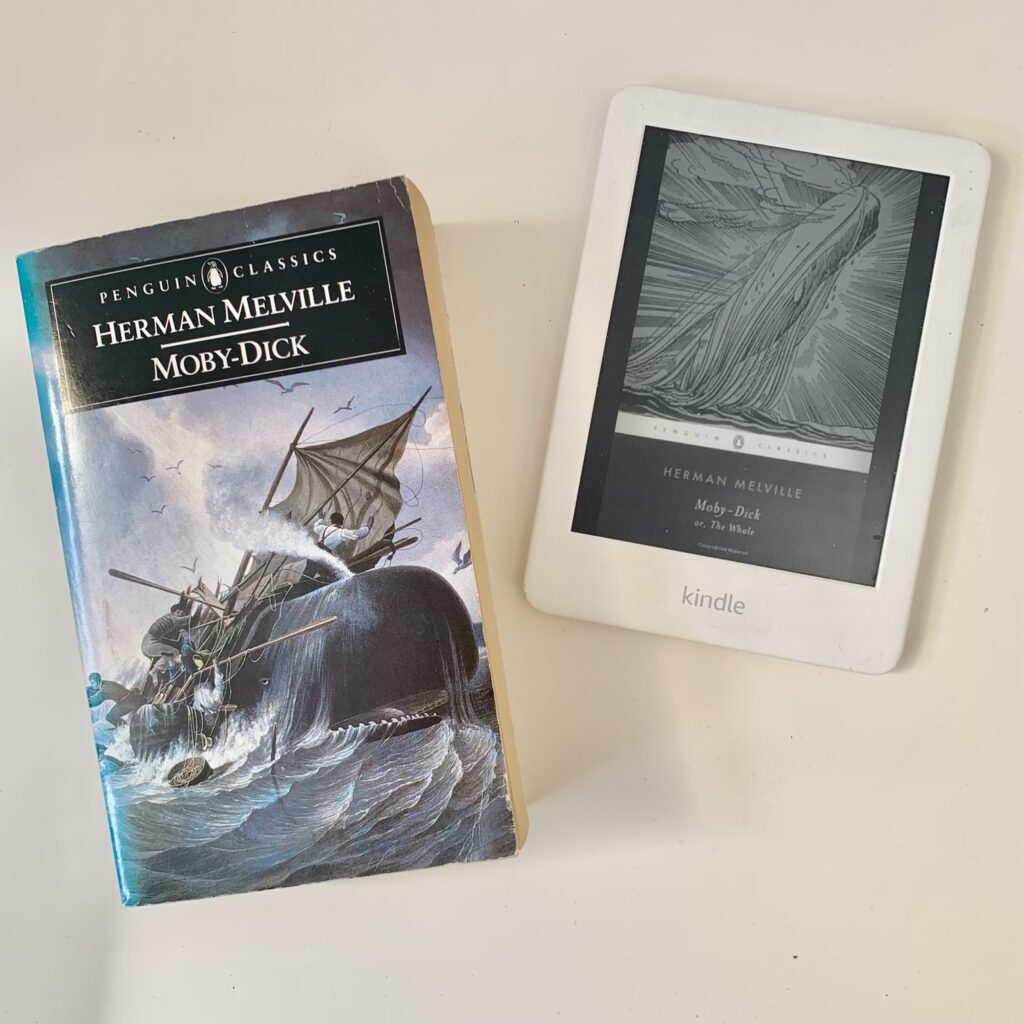
A discussion about the merits of reading a physical book rather than a digital copy led to considerations about the way that books – like songs – are associated with a particular moment in time in memory. There’s some truth to this. I often recall the first copy of a selection of Thomas Hardy’s poetry…
The Book of Alien, 1979
Another find at our local Oxfam bookshop, The Book of Alien. Published in 1979 to accompany the release of the movie, it’s a behind-the-scenes account of the production with lots of art (mainly by Ron Cobb but also by Moebius and Chris Foss) and photos. There are sections on spaceship design, sets and spacesuits, the…
Another Thrilling Star Wars Adventure!
Love these (fake) book covers for the first three Star Wars movies in the style of sixties pulp paperbacks. Illustrator Russell Walks is amazing!
The Dead of Night
Bought for £1 at the local hospital’s League of Friends bookshop. Onions is one of the great twentieth-century ghost story writers. This volume does include The Beckoning Fair One which Robert Aickmam described as “one of the (possibly) six great masterpieces in the field”. There’s an intense, manic quality to Onions’ writing that is incredibly…
-2,147,483,648 Hours and 24 Minutes
Decided to reinstall OSX on the macbook air that I mostly use at home. I bought it in 2012 and, other than upgrading it to Catalina (which is as new as OSX will go without using OCLP) it’s always worked great. Over the years I’ve installed a lot of apps, fiddled with the settings and…
Weeknotes wb 16 September 2024
I have to admit that I’m struggling to maintain these weekly notes (though I will endeavour to do so). Mainly it’s that I’m over-thinking the detail and it’s taking me far too long to put the notes together. So here’s something shorter… The “Season of mists” is most definitely upon us and I’m waking to…
Radio Times Lord of the Rings Cover
Lovely piece from 2021 by Brian Sibley about the cover to the 7th March 1981 issue of Radio Times. Sibley writes about the illustration, Eric Fraser, and his acquistion of the original artwork. Much like Jimmy Coulty’s stunning 1976 poster illustration for the novel, Sibley’s BBC dramatisation which was originally aired between March and August…
Make Something to Your Taste
At the bottom of Jay Springett’s latest post, Destination Distraction, he’s added a short video, Make Something to Your Taste, his latest 301 Permanently Moved podcast episode, which caught me at exactly the right time. It’s a mesmerising video where Springett is convincing in reinforcing the importance of creativity and a call to “Make a…
The Hartnell Years
Picked up a copy of The Doctor Who Production Diary: The Hartnell Years by David Brunt. I’m in the middle of watching the first season of Doctor Who from 1963-4 and, while I make great use of both the first volume of About Time and The Television Companion – both of which I’ve owned for…
Weeknotes wb 2 September 2024
Weather’s changed and there’s now a definite sense that Autumn’s begun. It’s cooler – almost cold – and darker during the day and we’re experiencing sudden showers. By the end of the week the children were both back at school (fairly happily, which is a relief) and I’m getting to grips with how things seem…
Agatha: A Tale of Three Witches
I’ve just backed Andrew MacLean’s Kickstarter project, Agatha: A Tale of Three Witches. It’s a prequel to MacLean’s fantastic quarterly series, Head Lopper, a comic I’ve bought from its first issue. (The last issue, #16, was released in 2021.) Anything Head Lopper gets an automatic “must buy” from me. There are a range of “rewards”…
Weeknotes wb 26 August 2024
September has always been the pivot on which the year turns. My birthday is in a couple of days and, as a child, it would be the signal that the return to school would shortly follow (though in those days, the start of school seemed to be about a week after my birthday). And here…
Weeknotes wb 19 August 2024
There’s a definite sense that summer is coming to an end. It’s feeling cooler in the mornings and grey clouds and rain have dominated many of the days this week. Come to that late-summer point where I’m genuinely uncertain about which day of the week it is. Doing (or should that be Done?) Another “summer…
Weeknotes wb 12 August 2024
This is the first of my attempt at maintaining a weekly “weeknotes” used to intentionally review and reflect on the last seven days. I know that the format of this weeknotes isn’t quite right and will undoubtedly undergo changes. I’ve enjoyed reading the weeknotes and, after some recent posts by bloggers talking about why they…
Hüsker Dü Live
Spent a couple of hours today listening to some of the live recordings of Hüsker Dü that can be found on the Internet Archive. It’s a mixed bag: some pretty good ones that sound as if recorded at the mixing desk, while others are just muffled noise with the occasionally recognisable vocal. I can understand…
Control
Eventually picked up a copy of Control, a five year-old game I didn’t realise I wanted to play until the release of Alan Wake 2 revealed that it was set in a shared universe. Described as “a solid comedy pastiche of the X-Files, right down to a mysterious smoking man” by Rock, Paper, Shotgun reviewer…
“it’s the nameless non-slop that matters”
Wonderful post by John Higgs which ranges from the Trump assassination attempt, the Olympics opening ceremony to “knobbing about”. Higgs makes the best analysis of the Olympic opening ceremony I’ve seen, dscribing it as “slop”, which he defines as The ceremony was a lot like modern digital culture. We are bombarded with seemingly unconnected ideas…